
How Do I Sue My Dentist?
If you’ve suffered pain, injury, or financial losses as a result of dental negligence, suing the dentist responsible can help you get the justice and compensation you deserve.
In this guide, we’ll explain how to sue a dentist and what criteria you must meet to be eligible to start the dental negligence claims process.
Who can sue a dentist?

To sue a dentist, you must be able to prove that they failed to provide you (or your loved one) with an acceptable standard of care, and that this directly resulted in pain, injury, or financial losses. All of the following must apply for you to be eligible:
- Your dentist breached their duty of care: All dental professionals owe their patients a duty of care. There must be evidence to show that the treatment you received fell below the standard expected of a reasonably competent dentist. A breach of duty could include anything from making a mistake during dental surgery to failing to diagnose a condition such as gum disease.
- You suffered harm as a direct result: It’s not enough for a mistake to have been made – it must have caused you avoidable pain, injury, or financial losses for you to be able to make a claim. This might include ongoing dental problems, the need for corrective treatment, lost earnings, or additional medical costs.
- Your claim is within the time limit: In most cases, you have three years from the date of the negligence (or from when you first became aware of it) to start a claim. Exemptions are in place for children under the age of 18 and people with mental disabilities or illnesses.
Not sure whether you meet the criteria? We can help. Get in touch with the Dental Law Partnership.
How do I sue a dentist?
If you think you may have a valid dental negligence claim and you’d like to start the process of suing your dentist, it can be hard to know where to start.
The first step is to contact a dedicated dental negligence law firm like the Dental Law Partnership. We’ve helped thousands of people get the justice they deserve since our inception in 2000, and our no-win, no-fee policy means there’s no financial risk involved.
To get the ball rolling, get in touch with us today.
In most cases, your claim will be resolved in the negotiations stage. However, you may need to go to court if we aren’t able to settle the claim with the defendant. If this happens, you will be advised on the next steps by your assigned dental negligence solicitor.
We can’t advise on a time frame for your case, as all circumstances are different and the timing will depend on the nature of the claim. However, we’ll do our best to ensure your case is resolved in a timely manner, and we’ll keep you updated through every step of the process.
Our no-win, no-fee guarantee
At the Dental Law Partnership, all our dental claims are conducted on a conditional fee agreement – otherwise known as our ‘no-win, no-fee’ guarantee. This means that you will never need to pay anything upfront for your claim.
If, for any reason, your claim is not successful, you will not need to pay us anything. We pride ourselves on our transparent approach. Before agreeing to your case, you will sign a no-win, no-fee agreement, which will detail the fee agreement in full.
If you have any further questions about how our no-win, no-fee guarantee works, we’ll be happy to advise you further.

What are the main reasons for choosing to sue your dentist?
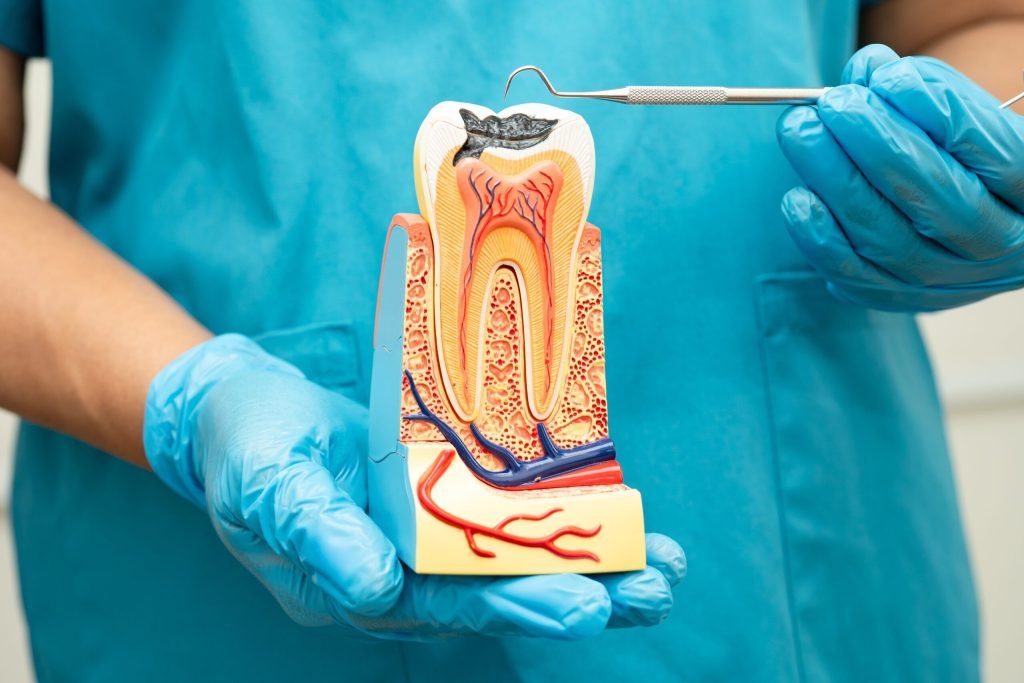
There are many reasons why somebody might choose to sue their dentist. Suffering a physical injury whilst at the dentist is a leading cause for opening a dental malpractice claim, however there are other reasons you may potentially be able to sue.
Most of our cases fall within one of the following categories, however you may be able to claim for more than one issue at a time:
- Misdiagnosis/failure to diagnose a condition
- Personal injury
- Financial loss
- Failure to obtain consent
- Psychological trauma
At the Dental Law Partnership, we can make claims for all treatments within England and Wales – whether your poor treatment occurred through the NHS or at a private dentistry clinic.
If you’ve suffered in a way that isn’t listed here and you’d like to see whether your situation could lead to a successful claim, request a callback from our experienced team.
Misdiagnosis or failure to diagnose a condition
If your dentist misdiagnoses a health condition or fails to diagnose it completely, you may be able to open a dental malpractice case.
If an oral condition (for example, gum disease) is found early enough, it is usually easier to treat. However, if you have a dental health condition that is not diagnosed in time, it may get worse and lead to further health issues, you may be able to make a dental negligence claim.
All dentists have a duty of care and are trained to diagnose oral health and dental conditions when you go for a check-up. If your dentist fails to diagnose a dental issue during a dental check up, then this would be considered to be negligence as the standard of care has dropped.
This is particularly important when it comes to things such as oral cancer or gum disease, as these conditions can become very serious if not diagnosed and treated in time.
Some of the common conditions dentists often fail to diagnose include:
- Gum disease/Periodontal disease
- Oral cancer
- Tooth decay
- The need for root canal treatment
- The need for tooth extraction
If you’ve developed an oral health condition that your dentist has failed to diagnose, you may be able to claim for negligence – especially if the condition has gotten worse or requires further treatment due to misdiagnosis. If your dentist diagnoses an oral issue but fails to inform you correctly or treat the issue, you may also be eligible to claim.
To find out more about suing your dentist for failing to diagnose a condition, simply fill in our easy contact form and we’ll assess your situation.
Psychological trauma
Going to visit the dentist can be a scary proposition for some people, with approximately 36% of the British population suffering from dental anxiety.
If you’ve had a traumatic experience at your dental surgery due to negligence, you may also find yourself suffering from psychological issues. This can be harmful to your overall state of mental health – particularly if you already had a fear of visiting the dentist.
There is also evidence to suggest that poor mental health can lead to further dental issues. Studies show that there is a link between gum disease and depression, as people are more likely to develop low mood disorders when they have a medical history of gum disease.
A study published by the Journal of Clinical Periodontology found that people who have regular feelings of depression and low mood are 20% more likely to have severe gum disease. It’s theorised that there are two major reasons for this:
- Depressive episodes are thought to hinder the body’s ability to fight off inflammation, which is one of the early symptoms of gum disease.
- People suffering from depression and other mental health disorders may be more likely to neglect their oral health
This means that if you suffered from psychological trauma as a result of dental negligence, you could also be more likely to face additional harm from other oral health conditions.
If your mental health has deteriorated as a direct result of dental negligence, you may be able to make a claim. Psychological trauma resulting from negligence usually occurs alongside cases in which physical harm has also happened. You may be able to make a larger claim if additional harm has been caused to your mental health.
If you’d like to find out more about how to sue your dentist when negligence has resulted in psychological trauma, please get in touch with our helpful team.
How to make a complaint to your dentist
You may also want to make a complaint to your dentist, as well as suing them. People often choose to make a complaint as their first port of call, but you don’t need to have already made a complaint to start a dental claim.
Every situation is different and the way you complain may differ depending on whether your treatment was carried out by an NHS dentist or by a private dentist. Depending on your circumstances, you could be eligible for a refund or remedial dental treatment.
All complaints have to be made within a year of the negligent treatment occurring. If you have gone past the year mark, you can still open a dental negligence case up to three years after the incident happened.
If further treatment is required to fix an issue caused by negligent treatment, you may be able to get this carried out for free – so long as the remedial treatment is carried out within one year of the original work. However, to gain further financial redress for future treatment costs you would need to make a dental negligence compensation claim.
The first step is usually to contact the dental surgery directly, regardless of whether the negligence occurred at an NHS practice or at a private dentistry surgery. You can complain to the dentist or the practice manager – the process may differ slightly depending on the manner you choose to complain. The practice should also be able to provide a copy of their complaints procedure.
Other complaint options
If you have tried complaining to your dentist and the results weren’t satisfactory or you’d like to escalate your complaint further, there are several steps you can take.
If you’re an NHS patient, NHS England can help you to make a formal complaint. However, the complaint still has to be made within a year from when the negligence happened. You can also contact the commissioner of the NHS service you used for your dental work – to find out who your commissioner is, you should contact NHS England. NHS England will also have a complaints procedure, which you can request if you wish.
NHS patients can also speak to the Parliamentary and Health Services Ombudsman (PHSO) if they’ve exhausted their other options – please note that this is a service only available for NHS dentistry users.
If your negligent treatment was carried out at a private surgery, your options are slightly different. The Dental Complaints Service (DCS) is an independent complaints service funded by the General Dental Council (GDC) – the regulatory body for dentists in the UK. The DCS also offers free and impartial advice, so you can contact them for help without making a formal complaint.
The GDC may also investigate private treatment complaints, although the DCS should still be your first port of call. The GDC will usually only investigate complaints in situations where there may be a safety risk with your dentist. They may also get involved if the negligence you suffered could cause damage to public confidence in the dentistry industry.
You can also speak to the Care Quality Commission (CQC) to inform them about any negligent treatment you’ve suffered. However, the CQC will not be able to open a formal complaint on your behalf. However, they can use your information to prevent similar issues happening to other patients in the future.
If you’d like to go straight to making a claim, or you’ve made a complaint and you’re unsatisfied with the response, you can request a callback from our professional team here.
Hold your dentist accountable with the Dental Law Partnership
If you’ve been pondering the question ‘how to sue my dentist?’ and you’d like to proceed with a claim, the Dental Law Partnership is here to help.
We’re a specialist firm of dentists and legal professionals, which is one of the things that makes us unique. Since the Dental Law Partnership was formed in August 2000, we’ve helped thousands of people to successfully win dental negligence lawsuits against their dentists.
If you’d like to learn more about the claims process or you’d like to see how much compensation you could be facing, visit our other page, where we discuss how much compensation you can expect to receive for a potential claim, or check our client stories page contains all the necessary information.
If you’d like to start legal proceedings against your dentist, contact our expert team and we’ll get the process started.
We set the standard.
We hold the line.
The pioneer of dental accountability
See if you have a case for dental negligence